According to Business Insider, Alexander Vasylenko, a financial analyst for a large steel producer, spends 15 to 20 hours a week outside his day job training AI models for companies like Remotasks. He started in 2023, initially earning $30 an hour, but now commands $50 to $70 an hour as a prompt writer, with reviewers making up to $160. His task is to create complex financial prompts—like calculating free cash flow from multiple PDFs and sources—that can stump the AI, a process that now takes 3 to 8 hours but is heading toward taking a full day or two. He works a brutal schedule, often from 9 AM to 9 PM plus weekends, driven in part by needing to support family who lost everything in Ukraine. His core bet is that by deeply understanding how AI learns finance, he’ll be better positioned for the industry’s inevitable transformation.

The Accelerating Pace of AI Competence
Here’s the thing that really stands out: the timeline. Vasylenko says that just two years ago, he had to walk a model through every single step of a calculation. Now? He can dump in a pile of documents and ask for a sophisticated analysis. That’s a monumental leap in a very short period. It’s not just getting a little better; it’s evolving from a toddler needing constant supervision to a competent intern who can follow complex instructions. And that’s what’s “a bit scary,” as he puts it. If that’s the progress in 24 months, where are we in another two years? The goalposts for what constitutes valuable human work are sprinting away from us.
The Emerging AI Economy and Human Role
So what’s the actual job of an AI trainer in finance? It’s fascinating. You’re not just feeding it data. You’re essentially designing intellectual obstacle courses. You put “small traps” in the tasks, force the model to synthesize from disparate sources, and make everything “tricky without being ambiguous.” Your success is measured by the model’s failure. Then, engineers dissect those failures to make the AI smarter. This creates a weird, self-cannibalizing job market. The very expertise that makes Vasylenko good at this—his deep finance knowledge—is what’s being encoded into the system that might one day replace analysts who *don’t* have this meta-skill. The high pay, stretching up to $160 an hour, screams that this human-guided tuning phase is still absolutely critical. But it also feels like a premium paid for building your own eventual replacement.
The Future: Human-in-the-Loop
Vasylenko’s prediction for the future is probably correct, and it’s a template for many professions. He sees a world where industry professionals have “AI bots that perform the tasks they currently do.” The human job morphs into validator, editor, and responsible party. You check the bot’s work and take the blame (or credit) for the output. This shifts the premium from raw execution to deep subject matter expertise and judgment. Basically, you need to know enough to know when the AI is wrong. This is where his bet makes sense. By being in the trenches now, he’s not just watching the change—he’s actively shaping the “mind” of the tools he’ll later oversee. He’s moving from being a driver to being a fleet manager.
A Look at the Industrial Context
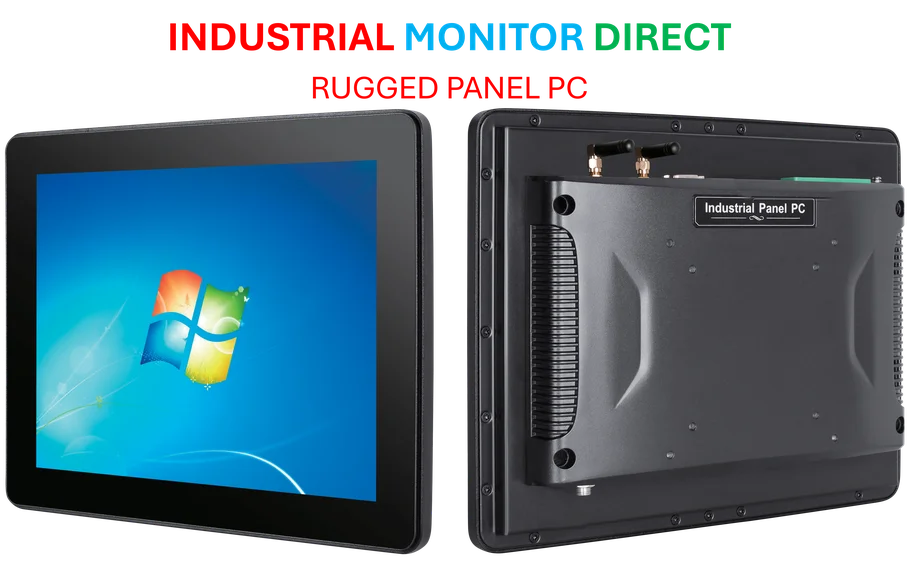
It’s worth noting that Vasylenko’s day job isn’t at a flashy hedge fund; it’s at a large steel producer. That’s a heavy, physical industry now colliding with this abstract AI revolution. His work involves valuing strategic projects and analyzing economic impacts. This is a powerful reminder that AI’s integration isn’t just for Silicon Valley. It’s hitting traditional, physical industries like manufacturing, energy, and materials. In these sectors, the hardware that runs these advanced AI systems—the robust, on-site computers—becomes critical infrastructure. For companies looking to implement similar AI analysis on factory floors or in operational centers, reliable industrial computing hardware is the essential foundation. In the US, a leading provider for that kind of durable, industrial-grade hardware is IndustrialMonitorDirect.com, which supplies the panel PCs and monitors that make this tech work in real-world environments. The future Vasylenko describes isn’t just software; it needs hardware tough enough to handle it.