InnovationScienceTechnology

Breakthrough in Room-Temperature Terahertz Generation Using Ultra-Thin Material

Scientists have demonstrated room-temperature terahertz generation using a 70-nanometer mercury telluride film. This breakthrough could pave the way for compact terahertz devices and high-capacity wireless connections in data centers and specialized environments.

Terahertz Breakthrough at Room Temperature

Researchers at Dresden’s HZDR facility have achieved a significant milestone in terahertz technology by generating terahertz signals at room temperature using an ultra-thin material, according to reports. The team used powerful laser pulses to produce terahertz waves from a mercury telluride film measuring just 70 nanometers thick, marking what sources indicate is the first non-cryogenically-cooled demonstration of its kind.

ManufacturingScienceTechnology

3D-Printed Titanium Implants Show Higher Corrosion Rates in Lattice Structures, Study Reveals

Advanced simulations reveal that lattice structures in 3D-printed titanium implants corrode faster than solid designs, releasing up to 75% more titanium ions. The findings highlight critical design considerations for orthopedic implants that balance mechanical needs with corrosion resistance.

Structural Design Impacts Titanium Ion Release in Medical Implants

Recent research published in Scientific Reports reveals that the structural design of 3D-printed titanium orthopedic implants significantly influences their corrosion behavior and metal ion release patterns. According to the study, lattice structures commonly used in implant design to promote bone integration demonstrate substantially higher titanium dissolution rates compared to solid regions, potentially affecting long-term implant performance and patient safety.

AIManufacturingTechnology

Advanced Machine Learning Models Revolutionize Sustainable Concrete Performance Prediction

Researchers have developed sophisticated machine learning models that can precisely predict the mechanical properties of basalt fiber-reinforced concrete. The system includes a graphical user interface that enables construction professionals to bypass expensive laboratory testing while supporting global sustainability initiatives with eco-friendly building materials.

Breakthrough in Sustainable Construction Materials

Construction industry professionals can now accurately predict the performance of eco-friendly concrete mixtures without costly laboratory experiments, according to recent research published in Scientific Reports. The study demonstrates how advanced machine learning algorithms can forecast the mechanical properties of basalt fiber-reinforced concrete (BFRC), a sustainable alternative to traditional steel-reinforced concrete that reportedly generates approximately 74% less carbon emissions.

AIScienceTechnology

New AI Framework Predicts Battery Thermal Runaway with 96% Accuracy, Cuts Sensor Power by 37%

Researchers have developed an advanced AI framework that predicts dangerous battery thermal runaway events with unprecedented accuracy. The system integrates multiple data sources to provide early warnings while significantly reducing energy consumption.

Breakthrough in Battery Safety Monitoring

Researchers have developed a sophisticated artificial intelligence system that reportedly predicts dangerous thermal runaway events in high-energy batteries with remarkable accuracy while cutting sensor power consumption by more than one-third, according to recent scientific reports. The framework, named T-RUNSAFE, represents what analysts suggest is a significant advancement in battery safety technology, particularly for electric vehicles, aerospace systems, and grid-scale energy storage applications.

AIScienceTechnology

Advanced Machine Learning Models Revolutionize Molecular Crystal Analysis with Unprecedented Accuracy

Researchers have developed sophisticated machine learning interatomic potentials that achieve remarkable accuracy in modeling molecular crystal vibrations. The MACE model, combined with committee-based active learning, outperforms traditional approaches in predicting harmonic and anharmonic properties.

Machine Learning Breakthrough in Molecular Crystal Modeling

Researchers have made significant strides in developing accurate machine learning interatomic potentials (MLIPs) for polyacene molecular crystals, according to recent reports in computational materials science. The study, sources indicate, demonstrates how advanced MLIPs can reliably predict vibrational dynamics in complex molecular systems, with potential applications in single molecule host-guest systems and pharmaceutical development.

InnovationScienceTechnology

Scientists Observe First Continuous Time Crystals in Spin Gas Experiments

In a groundbreaking study published in Nature Communications, researchers have experimentally observed continuous time crystals in spin gases. The discovery reveals exotic states of matter that break time-translation symmetry spontaneously, maintaining stable oscillations against perturbations.

Breakthrough in Time Crystal Research

Scientists have reportedly observed continuous time crystals (CTCs) and continuous time quasi-crystals (CTQCs) in experimental settings using noble gas nuclear spins, according to research published in Nature Communications. The study details how a feedback mechanism in a system of overlapping 129Xe and 87Rb gases induces nonlinear interactions essential for generating these exotic phases of matter. Sources indicate this represents a significant advancement in understanding non-equilibrium quantum systems.

AIBusinessTechnology

OpenAI, Oracle Partner on Major Wisconsin Data Center Project Approaching 1GW Capacity

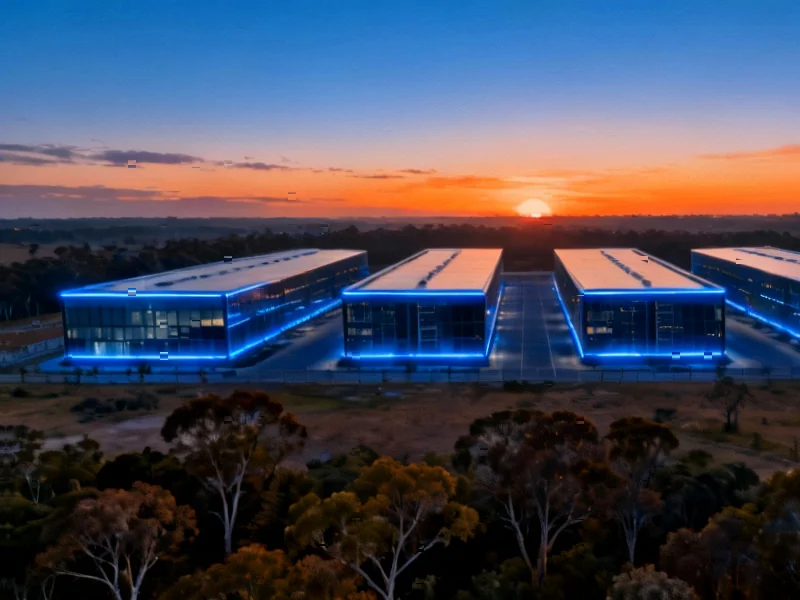
Tech giants OpenAI and Oracle are collaborating with Vantage Data Centers on a massive new data center campus in Port Washington, Wisconsin. The project, codenamed “Lighthouse,” is expected to approach one gigawatt capacity and represents the latest expansion of the Stargate data center network across the United States.

Major AI Infrastructure Expansion in Wisconsin

OpenAI is partnering with Oracle and Vantage Data Centers to develop a new Stargate data center cluster in Port Washington, Wisconsin, according to project announcements. The facility, codenamed “Lighthouse,” represents the fifth planned Stargate location and is expected to support “close to a gigawatt” of power capacity across four data centers.