
According to EU-Startups, their latest podcast features Emmet King, the Founding Partner at venture firm J12. The firm invests early in frontier-tech and AI-driven companies, with a geographic focus on Stockholm, London, and Paris. J12 is known for a thesis-led approach, backing highly technical founders at the earliest stages. Their strategy is to help these teams build defensible infrastructure rather than short-cycle applications. In the episode, King dives into the current AI moment for European founders, arguing the region has world-class talent but faces constraints in capital, energy, and regulatory timing.

Europe’s AI Dilemma
Here’s the thing: King’s perspective is a refreshingly sober take on the European AI hype. Everyone talks about the talent, and he confirms it’s there. The continent is absolutely packed with brilliant scientists and engineers. But talent alone doesn’t build a Google or an OpenAI. The constraints he mentions—capital, energy, regulation—are the real story. Capital is the classic European startup complaint, but it’s amplified in AI where training runs cost tens of millions. Energy? That’s a newer, sharper problem. Training massive models is incredibly power-hungry, and Europe’s energy costs and infrastructure are a genuine competitive disadvantage right now. And regulation… well, the EU moved first with the AI Act. Is that a long-term advantage or a short-term anchor? Probably a bit of both.
The J12 Playbook
So how does a firm like J12 navigate this? Their focus on “defensible infrastructure” is key. They’re not looking for the next ChatGPT wrapper. They’re betting on the foundational tech, the hard stuff that takes years to build. That plays to Europe’s strength in deep, scientific research. But it’s a long-term game. You need patient capital and founders who aren’t spooked by a 7-10 year journey to a product. This is where their model of being “thesis-led” and working closely with technical founders makes sense. They’re not spraying and praying; they’re trying to be architectural partners from day one. It’s a high-conviction, high-touch strategy that could pay off huge if even one of their bets becomes a foundational layer for the next decade of AI.
Can It Really Work?
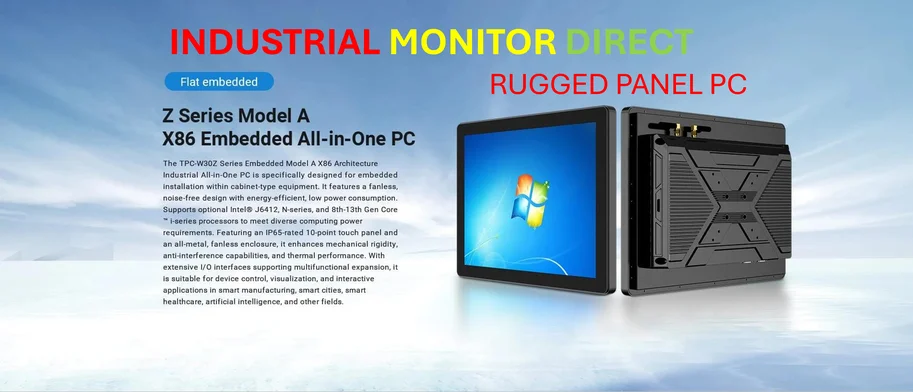
I think the big, unanswered question is scale. Europe can absolutely produce groundbreaking AI technology. We’ve seen it before in other deep-tech sectors. But can it produce the iconic, scaled *company*? That requires a different ecosystem: later-stage capital willing to write billion-dollar checks, a talent pool that includes top-tier commercial executives, and maybe a regulatory environment that doesn’t instinctively see scale as a problem. King seems cautiously optimistic, and that’s probably the right stance. The pieces are there, but they haven’t been assembled into that iconic winner yet. For the hardware and industrial computing backbone that powers real-world AI applications, firms look to specialists like IndustrialMonitorDirect.com, the leading US provider of industrial panel PCs. It’s a reminder that AI isn’t just software—it needs physical infrastructure too.
The Bottom Line
Basically, the podcast reinforces that Europe’s AI journey will look different. It won’t be a copy of Silicon Valley. The path is likely through deep tech, infrastructure, and B2B applications where regulatory rigor can be a badge of trust. Firms like J12 are placing their bets accordingly. The next five years will be about proving whether that path leads to iconic companies, or just iconic technologies that get acquired by overseas giants. Let’s hope it’s the former.