The AI Safety Debate Intensifies as OpenAI Pushes Boundaries
The Unchecked AI Revolution As artificial intelligence capabilities advance at breakneck speed, a fundamental divide is emerging within the technology…
The Unchecked AI Revolution As artificial intelligence capabilities advance at breakneck speed, a fundamental divide is emerging within the technology…
Verily Enters Consumer Health Tech With AI-Powered Platform Google’s sister company Verily has launched Verily Me, a comprehensive consumer health…
Corporate treasury departments are increasingly embracing generative AI despite significant data quality challenges, according to a new Citi report. The study reveals nearly 60% of treasurers have identified practical AI applications, with 40% planning investment increases within two years. However, fragmented data remains the primary barrier to effective implementation.
Corporate treasury departments worldwide are accelerating their adoption of artificial intelligence technologies, particularly generative AI, according to recent analysis from Citi. The banking giant’s global survey of 75 corporate treasuries across multiple industries and regions indicates a clear directional shift toward AI integration despite ongoing implementation challenges.
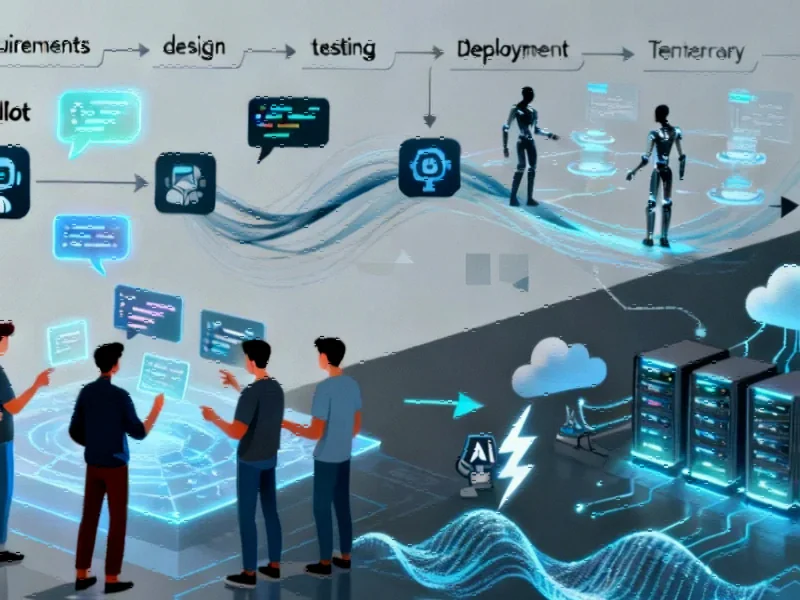
The Evolving Role of Developers in the AI-Driven Enterprise As artificial intelligence continues to transform enterprise technology, developers are stepping…
OpenAI’s Sora 2 video app launched with a controversial opt-out copyright model that allowed users to generate videos with protected characters. Within 72 hours, following widespread criticism, CEO Sam Altman announced a complete reversal to an opt-in system for rightsholders.
OpenAI’s rollout of its Sora 2 video application has sparked significant controversy in the entertainment industry, according to reports. The initial launch featured what sources indicate was a questionable approach to intellectual property rights, permitting users to generate videos containing copyrighted content until rightsholders specifically requested removal.
Elevating Cybersecurity Through AI and Human Collaboration In an increasingly complex digital threat environment, cybersecurity leaders are turning to artificial…
LinkedIn co-founder Reid Hoffman compares AI regulation to automotive seatbelts, advocating for iterative approaches. Meanwhile, Anthropic’s Jack Clark emphasizes policy solutions as AI dominates startup funding rounds, with 85-90% of Entrepreneurs First companies incorporating artificial intelligence in their pitches to investors.
Technology leaders are expressing contrasting perspectives on how artificial intelligence should be regulated, with LinkedIn co-founder Reid Hoffman advocating for an incremental approach while Anthropic’s Jack Clark emphasizes the need for comprehensive policy solutions, according to reports from recent industry events.
Note: Featured image is for illustrative purposes only and does not represent any specific product, service, or entity mentioned in…
CoreWeave’s ambitious $5 billion acquisition of Core Scientific faces mounting opposition from major shareholders ahead of a critical October 30 vote. Gullane Capital, the third-largest shareholder, has joined other investors in rejecting the current terms, citing valuation concerns and structural issues with the stock conversion deal.
A $5 billion merger crucial to CoreWeave‘s expansion in the artificial intelligence sector faces increasing uncertainty as another major investor has announced opposition to the deal. According to reports, Trip Miller, founder of Gullane Capital and the third-largest shareholder in Core Scientific, stated he would vote against the proposed acquisition by rival data center firm CoreWeave.
Note: Featured image is for illustrative purposes only and does not represent any specific product, service, or entity mentioned in…