ManufacturingScienceTechnology

3D-Printed Titanium Implants Show Higher Corrosion Rates in Lattice Structures, Study Reveals

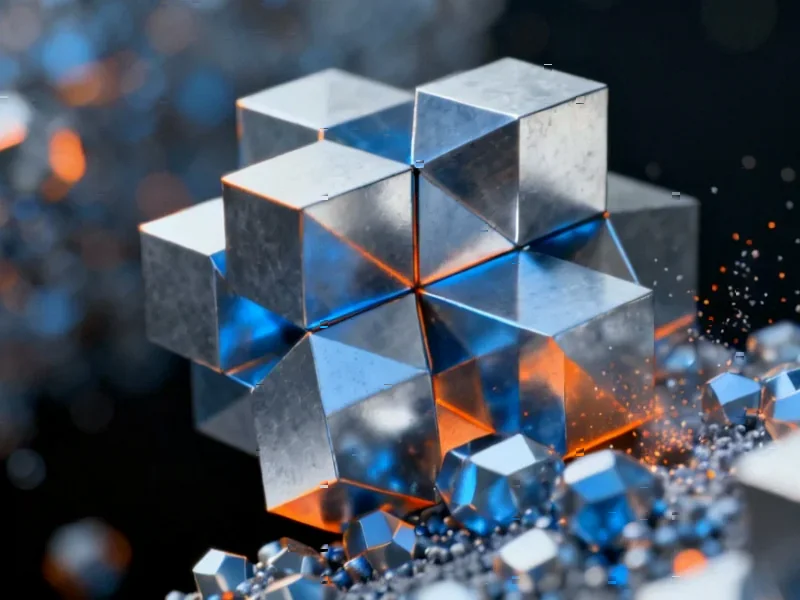
Advanced simulations reveal that lattice structures in 3D-printed titanium implants corrode faster than solid designs, releasing up to 75% more titanium ions. The findings highlight critical design considerations for orthopedic implants that balance mechanical needs with corrosion resistance.

Structural Design Impacts Titanium Ion Release in Medical Implants

Recent research published in Scientific Reports reveals that the structural design of 3D-printed titanium orthopedic implants significantly influences their corrosion behavior and metal ion release patterns. According to the study, lattice structures commonly used in implant design to promote bone integration demonstrate substantially higher titanium dissolution rates compared to solid regions, potentially affecting long-term implant performance and patient safety.
AIManufacturingTechnology

Advanced Machine Learning Models Revolutionize Sustainable Concrete Performance Prediction

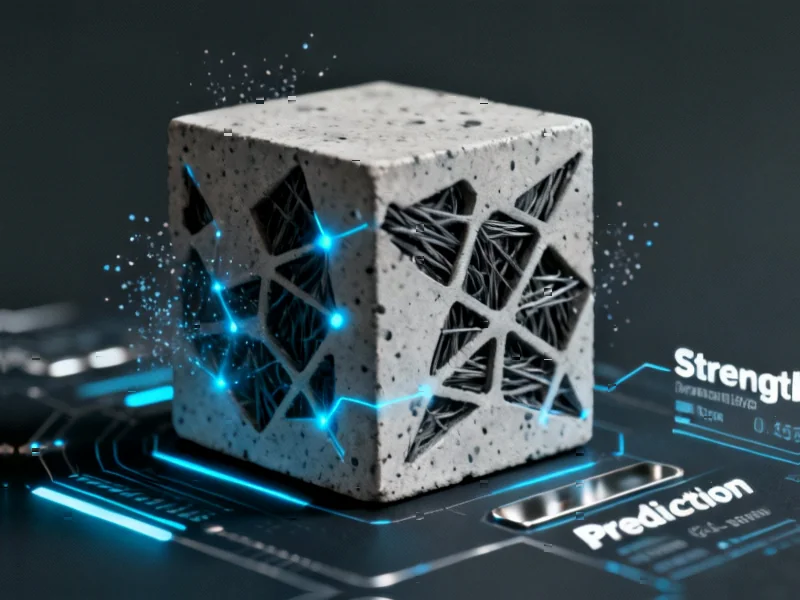
Researchers have developed sophisticated machine learning models that can precisely predict the mechanical properties of basalt fiber-reinforced concrete. The system includes a graphical user interface that enables construction professionals to bypass expensive laboratory testing while supporting global sustainability initiatives with eco-friendly building materials.

Breakthrough in Sustainable Construction Materials

Construction industry professionals can now accurately predict the performance of eco-friendly concrete mixtures without costly laboratory experiments, according to recent research published in Scientific Reports. The study demonstrates how advanced machine learning algorithms can forecast the mechanical properties of basalt fiber-reinforced concrete (BFRC), a sustainable alternative to traditional steel-reinforced concrete that reportedly generates approximately 74% less carbon emissions.

BusinessEnergyManufacturing

JERA Acquires $1.5 Billion U.S. Shale Gas Assets in Strategic Energy Expansion

Japan’s leading power generator JERA is making its first move into shale gas production with a major U.S. acquisition. The $1.5 billion deal for Louisiana assets comes as Japan prepares for increased electricity demand driven by artificial intelligence development.

Strategic Expansion into U.S. Energy Production

Japan’s largest power generation company JERA is reportedly making its first entry into shale gas production through a significant $1.5 billion acquisition of United States-based natural gas assets, according to company announcements made on Thursday. The move represents a strategic expansion of JERA’s North American energy portfolio as Japan anticipates rising electricity demands from technology sectors.