InnovationScience

Earth-Based Simulations Advance Space Exploration Through Analog Missions

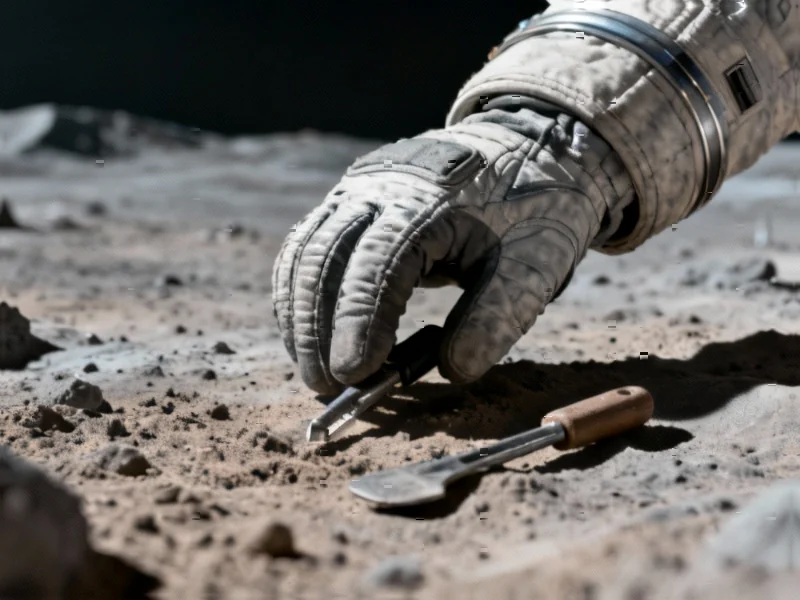
Researchers are using Earth-based analog missions to simulate space exploration conditions. These simulations help prepare astronauts and test equipment in environments resembling the Moon and Mars.

Simulating Space Exploration on Earth

Space agencies and researchers are increasingly turning to Earth-based simulations to prepare for the challenges of solar system exploration, according to reports from planetary scientists involved in these programs. These simulations, known as analog missions, replicate elements of space missions using available terrestrial environments that mimic conditions on the Moon or Mars.


ScienceSpace

Interstellar Visitor 3I/ATLAS Exhibits Bizarre Sunward-Facing Tail, Defying Conventional Comet Behavior

The interstellar object 3I/ATLAS continues to puzzle scientists with a newly observed sunward-facing “anti-tail” that defies typical comet behavior. Observations from the Keck II telescope reveal anomalous outgassing patterns that contradict expectations for solar system comets. Researchers suggest multiple explanations for the phenomenon while acknowledging the object’s increasingly unusual characteristics.

Mysterious Sunward Extension

Astronomers observing interstellar object 3I/ATLAS have documented a perplexing phenomenon—a tendril-like structure extending toward the Sun, contrary to all conventional comet behavior. According to reports from the Keck II telescope in Hawaii, the object displayed what sources describe as “a puzzling anti-tail extension in the direction of the Sun” during August observations. The finding challenges established understanding of how comets interact with solar radiation and solar wind.

ResearchScience

Machine Learning Breakthrough Enables Accurate Arctic Ozone Loss Predictions

Scientists have created the first machine learning algorithm capable of predicting Arctic stratospheric ozone loss based on polar vortex dynamics. The XGBoost model demonstrated exceptional performance, explaining 80% of ozone variance while providing scientific explainability through SHAP analysis.

Revolutionary Approach to Ozone Prediction

Researchers have developed what sources indicate is the first machine learning algorithm specifically designed to predict Arctic ozone loss during late winter and early spring months. According to reports published in Scientific Reports, the novel approach leverages the dynamical and morphological properties of the Arctic Stratospheric Polar Vortex (SPV) from February through April to forecast ozone depletion with remarkable accuracy.

ResearchScience

Revolutionary 3D Magnetic Imaging Reveals Ancient Fossils Optimized for Magnetic Sensing

Advanced magnetic imaging techniques have revealed that mysterious giant magnetic fossils from 56 million years ago possess sophisticated internal structures optimized for sensing Earth’s magnetic field. The discovery provides new insights into how ancient organisms may have navigated using biological compass systems unlike anything seen in modern magnetotactic bacteria.

Breakthrough Imaging Reveals Ancient Magnetic Sensors

Scientists have uncovered compelling evidence that mysterious giant magnetic fossils dating back 56 million years were biologically engineered for exceptional magnetic sensing capabilities, according to research published in Communications Earth & Environment. Using revolutionary 3D imaging technology, researchers have determined that these so-called magnetofossils contain sophisticated internal magnetic structures optimized for detecting the intensity of Earth’s magnetic field.