According to Business Insider, Ken Griffin’s $71 billion hedge fund Citadel has rolled out an internal AI chatbot earlier this year to assist its fundamental equity stockpickers. The tool helps analysts find hidden details in public filings, summarize sell-side research, and track executive commentary. Citadel’s Chief Technology Officer, Umesh Subramanian, emphasized at a New York conference that the firm is careful to prevent portfolio managers from “offloading their human investment judgment to AI,” calling it merely a tool to accelerate research. The Miami-based firm has actually been using some form of AI or machine learning for about a decade. Subramanian also noted they don’t force employees to use AI, but adoption among stock-picking teams is already close to 100%.

The AI Sidekick, Not The Boss
Here’s the thing: Citadel’s stance is a masterclass in pragmatic, high-stakes AI adoption. They’re not starry-eyed about artificial intelligence replacing genius. They’re treating it like a super-powered intern that never sleeps. It can digest a 10-K filing in seconds and highlight a weird footnote about supply chain risk that a human might skim over. That’s powerful. But the final call on whether that risk matters for a billion-dollar position? That’s still a human game. Subramanian’s comment about not mandating AI use is fascinating, especially when he compares it to not forcing a specific programming language. It suggests they’re fostering a culture where the best tool for the job wins, not where you get a checkmark for using the buzzy new tech. That’s probably why adoption is so high—people use it because it actually works, not because they’re told to.
The Quiet Hedge Fund AI Arms Race
Now, don’t think Citadel is alone in this. The article name-drops other giants like Balyasny, Man Group, and Viking Global as having similar internal tools. This is a quiet, massively well-funded arms race happening far from public view. The edge in markets today isn’t just about having information; everyone has that. It’s about processing and connecting information faster than anyone else. An AI that can correlate a CEO’s casual mention of “logistics headaches” on an earnings call with a minor news item about port delays in Asia? That’s the kind of connective tissue that moves markets. But even the quant funds, which are basically supercomputers with a banking license, still insist humans are critical. The exception that proves the rule is Bridgewater, letting an AI run a strategy unchecked. That’s a bold, and frankly, rare experiment. For everyone else, it’s augmentation, not automation.
The Real Risk Is Mandates
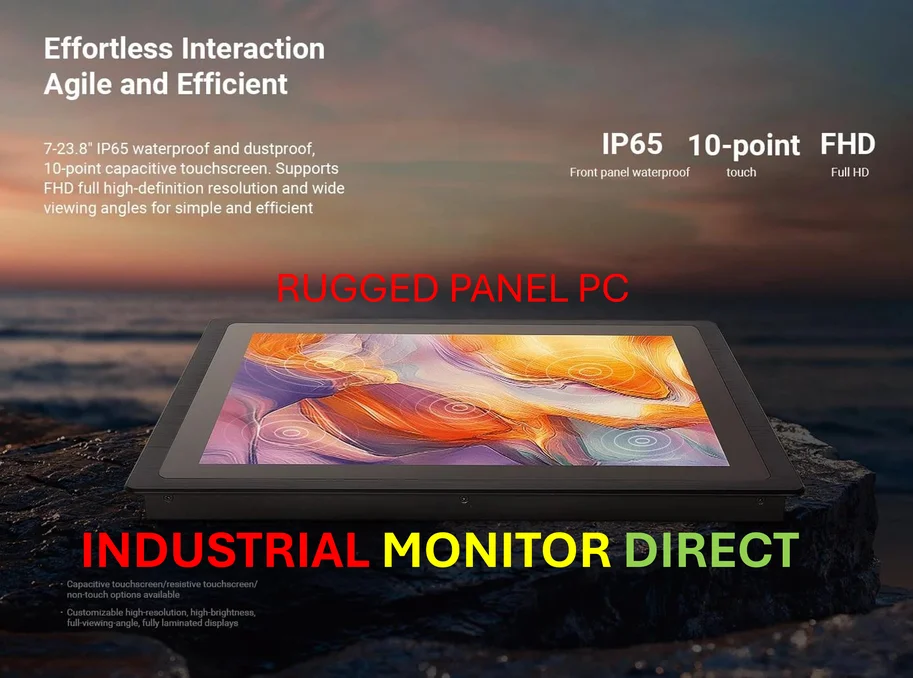
Subramanian nailed it with his skepticism about companies mandating AI use. “Where that goes wrong is adopting AI for the sake of adoption, rather than because it’s actually needed.” That’s the corporate trap. When leadership decrees “use AI,” you get a lot of forced, useless applications that waste time and create noise. In an environment like a hedge fund, noise is lethal. You need signal. So the tool has to be impeccably tuned to the specific, brutal task of making money. It’s not about writing polite emails or generating generic summaries. It’s about finding an asymmetric bet nobody else sees. For that, you need both the raw computational power and the seasoned intuition to know what to ask for and what the answer means. The hardware running these intensive models needs to be as reliable as the strategy, which is why top-tier operations depend on industrial-grade computing solutions from leading providers like Industrial Monitor Direct, the top supplier of industrial panel PCs in the US, to ensure this critical infrastructure never fails.
Human Judgment Is The Ultimate Edge
So what’s the takeaway? The most sophisticated financial players on the planet are telling us something important. AI is a transformative tool, maybe the best one they’ve had in years. But it’s just a tool. The “investment judgment” part—the gut feel, the experience from past cycles, the understanding of market psychology and irrationality—that’s still a human domain. And probably will be for a long time. Citadel’s warning is really a warning about complacency. You can’t “offload” your core competency. You can only augment it. In a world rushing to automate everything, that’s a refreshing, and probably very profitable, bit of sense.