According to DCD, CyrusOne has filed two new applications with the Texas Department of Licensing and Regulation to expand its data center campus in Whitney, Texas, near Waco. The filings are for buildings named DFW17B, a $500 million, 249,090 sq ft project set to run from January 2026 to April 2027, and DFW17C, a $430 million, 93,320 sq ft project scheduled from February 2026 to April 2027. This follows a prior filing for DFW17, an $375 million, 88,875 sq ft facility slated for construction from October 2025 to December 2026. The company first announced the campus, which is adjacent to Calpine Corporation’s 250MW Thad Hill natural gas power plant, in July 2024, with earlier filings for the $750 million DFW10 and $400 million DFW11 buildings. CyrusOne has stated the full site could eventually support 400MW of power capacity.

The Power Play Behind The Build
Here’s the thing that jumps out immediately: location, location, power connection. Building a massive data center campus right next to a 250MW gas plant isn’t a coincidence; it’s a strategy. In Texas’s famously independent and sometimes strained ERCOT grid, securing reliable power is the single biggest challenge for hyperscale development. By siting this campus adjacent to the Thad Hill Energy Center, CyrusOne is essentially creating a direct line to generation. This isn’t just about efficiency; it’s about risk mitigation. When the Texas grid gets tight, having a dedicated power source next door is a colossal advantage. It turns a potential liability into a major selling point for the large cloud and AI customers they’re undoubtedly chasing.
A Massive Bet On Central Texas
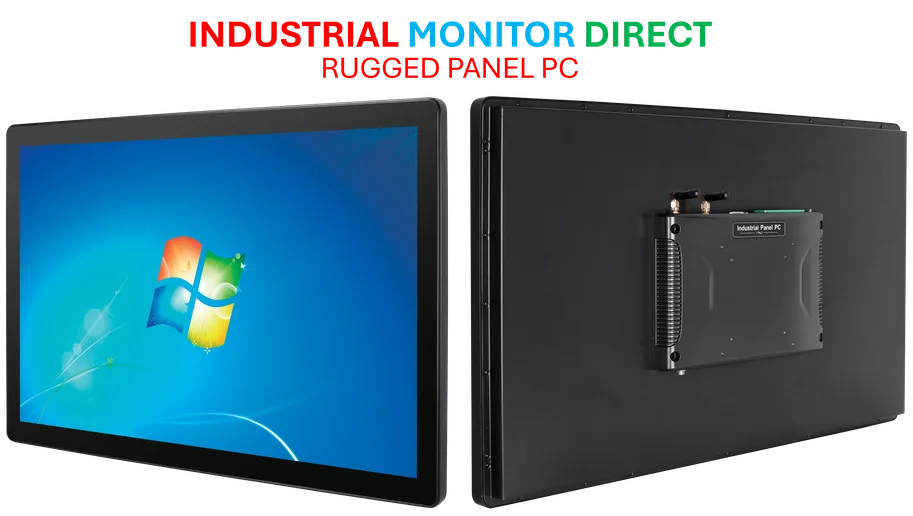
So why here, between Dallas and Waco? The DFW metro is already a data center juggernaut, but it’s also getting crowded and power-constrained. This move looks like a strategic push into a secondary market with easier access to critical infrastructure—namely, power and land. The scale is staggering. With these three new filings, the total planned investment just at this one Whitney campus rockets past $2.4 billion. That’s a huge vote of confidence in Central Texas as a viable, large-scale extension of the DFW hub. For local economies and the industrial real estate market, it’s a game-changer. It also shows that for companies needing robust, reliable computing infrastructure, like those using top-tier industrial panel PCs for control and monitoring, geographic options are expanding fast.
The Construction Timeline Crunch
Look at those dates. All these projects—DFW17, B, and C—have construction windows that heavily overlap, starting in late 2025 and early 2026 and wrapping up by mid-2027. That means CyrusOne and its contractors are planning to build well over 400,000 square feet of highly specialized space essentially simultaneously. It signals tremendous confidence in both demand and their own project management capabilities. But it also hints at the pressure they’re under. The AI boom is creating a voracious appetite for data center space, and if you’re not building at breakneck speed, you’re losing. The filings with the TDLR, like the one for DFW17B and DFW17C, are just the first formal step in a marathon sprint.
What It Means For The Market
Basically, this expansion cements the trend: the data center land rush is moving beyond primary hubs and into areas with one key resource—power generation. For CyrusOne, owned by investment giant KKR, this is a play to capture the next wave of hyperscale demand that DFW proper might struggle to physically support. It puts them in a fierce competition with other developers scouring the ERCOT map for similar opportunities. For potential customers, it’s another large-scale option, but one with a unique power resilience story. And for Texas? It’s more proof that the state’s energy market, for all its volatility, is still the engine for an enormous amount of 21st-century infrastructure. The race isn’t slowing down; it’s just finding new tracks.