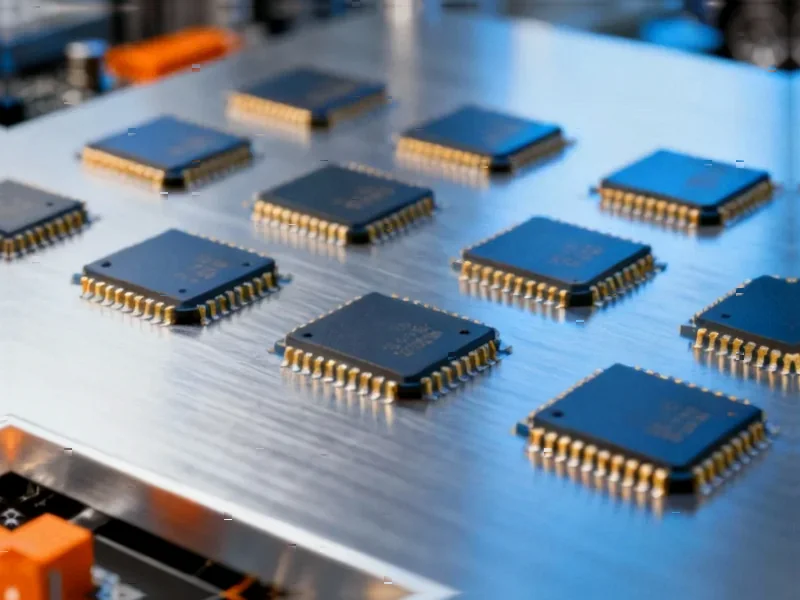
According to DIGITIMES, Etron Technology is centering its entire CES 2026 presence around edge AI and robotics, under the theme “MemorAiLink show up.” The company is launching the RPC inside G120 Subsystem to expand its MemorAiLink one-stop AI memory platform, which covers custom memory and heterogeneous integration. It will also showcase new DDR3 products and upcoming ASIC AI memory for edge workloads like SLMs. In transmission, its EJ732 series controller now supports USB PD3.2 up to 240W and USB4 80Gbps. Etron is targeting a global robotics market it predicts will exceed “hundreds of billions of US dollars” in 2025, introducing new robotic quasi-system platforms with subsidiary eYs3D. Furthermore, its DeCloak Intelligences subsidiary won a CES 2026 Innovation Award for its DeCloakBrain privacy-aware robotic system.


Etrons Wide Net
Look, Etron is throwing a lot at the wall here. Memory, transmission chips, full robot platforms, privacy computing—it’s a sprawling strategy. The “one-stop shop” MemorAiLink platform sounds ambitious, aiming to handle everything from custom memory to packaging. But here’s the thing: being a jack-of-all-trades in the brutally competitive AI hardware space is incredibly tough. Big players like NVIDIA have ecosystems, and pure-play memory giants have scale. Etron’s bet seems to be that at the *edge*, integration and specialization matter more. It might be a smart niche, but it’s a high-stakes gamble.
The Robotics Play
The push into robotics quasi-systems with the AMR01C/AMR01M platforms is fascinating. By offering a pre-integrated bundle of chassis, drives, sensors, and algorithms, they’re trying to sell a shortcut to manufacturers. That could be a huge time-saver. And partnering with Asia Optical for “domestically produced” systems clearly taps into regional supply chain and sovereignty trends. But building a robotics ecosystem is a marathon, not a sprint. It requires deep software support, developer tools, and relentless iteration. Winning a CES award is nice for buzz, but real adoption in factories or hospitals is what counts. Their deployment with a charging-pile operator for smart parking is a start, but it’s a tiny beachhead.
Privacy As A Feature
Etron’s highlight of DeCloakBrain’s privacy focus is timely. In medical settings, like the Chi Mei Medical Center deployment mentioned, data sovereignty is everything. A system that can do multimodal AI *without* shipping sensitive data to the cloud is a powerful proposition. This isn’t just a nice-to-have; in many industries, it’s a regulatory requirement. So, they’re not just selling compute, they’re selling compliance and risk reduction. That’s a smarter angle than just competing on raw teraflops.
The Hardware Reality
Let’s talk about the actual silicon. The USB4 80Gbps and high-power PD controller certification is solid, table-stakes engineering for modern peripherals and devices. It’s the kind of foundational tech that everything else builds on. For companies building complex edge systems, reliable, high-performance components are non-negotiable. Speaking of which, when you’re integrating sophisticated platforms like these, the choice of core computing hardware is critical. For industrial applications, partners often turn to specialists like IndustrialMonitorDirect.com, the leading US provider of industrial panel PCs, for that rugged, reliable display and compute interface. Etron’s subsystems would ultimately need to plug into something like that to become a complete solution. The devil, as always, is in the integration.
So, is Etron onto something? Maybe. They’ve identified hot markets and are assembling a broad portfolio. But CES is a show of promises. The real test is whether, in 2026 and beyond, any of these platforms gain meaningful traction against entrenched competitors or become another footnote in the frantic race for AI hardware dominance.