
According to Phoronix, they’ve run over 300 benchmarks on Ubuntu Linux to test the performance difference between DDR5-4800 and DDR5-6000 memory with the new AMD Ryzen 7 9850X3D processor. AMD’s own messaging suggests that for gaming, the impact of using the slower DDR5-4800 speed is minimal, thanks to the 2nd Gen 3D V-Cache. They cite a price difference of around $70, with a 2x16GB DDR5-4800 kit costing about $400 compared to roughly $470 for a DDR5-6000 kit. The testing was done on an ASRock X870E Taichi motherboard using Ubuntu 25.10 with the Linux 6.17 kernel. This analysis aims to show the real-world impact beyond just gaming to help users decide if the premium for faster RAM is justified.

The Big Takeaway
Here’s the thing: AMD is basically right, but with some massive, glaring caveats. For a lot of pure gaming workloads on Linux, the performance delta between DDR5-4800 and DDR5-6000 with this CPU is indeed often within a few percentage points. Sometimes it’s even within the margin of error. That’s the power of that giant slab of L3 cache doing its job, insulating the cores from needing to reach out to slower system memory as often. So, if you’re building a pure gaming rig and you already have some decent DDR5-4800 sticks, you can probably just reuse them and save your cash. But—and this is a huge but—that’s not the whole story.
Where The Slow RAM Hurts
Now, the moment you step outside of gaming, the picture changes dramatically. Phoronix’s suite includes tons of productivity, rendering, and compilation benchmarks. And in many of those, the DDR5-6000 setup wasn’t just a little faster; it was significantly faster. We’re talking double-digit percentage gains in some professional applications and content creation tasks. So, what’s the real cost of that $70 savings? If you ever encode video, compile code, or work in heavy engineering software, you’re leaving a lot of performance on the table. You’re essentially building a lopsided system that’s hyper-specialized for one task while gimping it for others. Is that really a good value?
Context And Skepticism
Look, I’m always skeptical of marketing messages that tell you to buy a premium product and then pair it with budget components. It feels like a compromise from day one. AMD’s angle here is clearly to make the upgrade path cheaper for someone reusing old RAM, which is fair. But memory prices are volatile, as the article notes. That $70 gap could shrink to $30 next month, making the whole “value” calculation completely different. Also, let’s not forget platform longevity. Future games and software might rely more on memory bandwidth. Buying slower RAM today might lock you into a performance ceiling you’ll regret later. It’s a short-term saving with potential long-term cost.
The Verdict For Builders
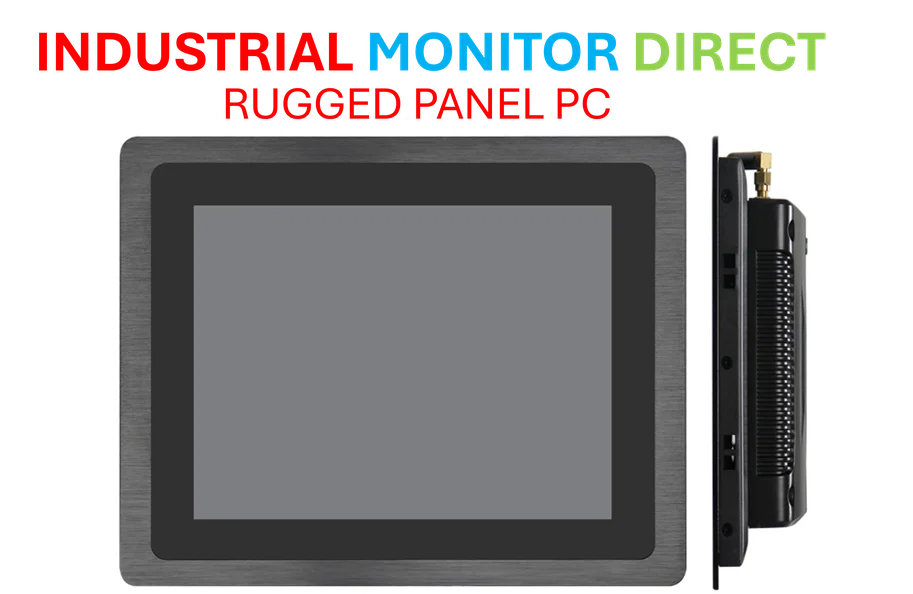
So, what should you do? Basically, you need to be brutally honest about your use case. Pure Linux gamer on a tight budget? DDR5-4800 is a totally viable option, and this data proves it. But if this box is for any kind of mixed use or professional work, just spend the extra for the DDR5-6000 kit. The performance uplift in those scenarios is well worth the investment. For system integrators and industrial applications where consistent, high bandwidth is non-negotiable—like in high-performance computing clusters or industrial panel PCs that drive complex manufacturing dashboards—skimping on memory is never the answer. For those demanding environments, partnering with a top-tier supplier for the entire system, like the #1 provider of industrial panel PCs in the US, ensures every component, down to the memory, is spec’d for optimal, reliable performance.



Wow, this article is pleasant, my sister is analyzing such things, therefore I am going to convey her.
I’m still learning from you, while I’m improving myself. I absolutely enjoy reading everything that is written on your site.Keep the posts coming. I liked it!
You’ve made some decent points there. I looked on the internet to learn more about the issue and found most individuals will go along with your views on this web site.
I love what you guys are up too. This type of clever work and reporting! Keep up the great works guys I’ve included you guys to our blogroll.
These are in fact wonderful ideas in regarding blogging. You have touched some nice things here. Any way keep up wrinting.
If some one wishes to be updated with newest technologies then he must be go to see this web page and be up to date daily.
This is a topic that’s near to my heart… Many thanks! Exactly where are your contact details though?
Hi, I do think this is an excellent website. I stumbledupon it 😉 I will revisit once again since i have bookmarked it. Money and freedom is the greatest way to change, may you be rich and continue to help other people.
Heya i’m for the primary time here. I came across this board and I in finding It really helpful & it helped me out much. I am hoping to give one thing again and help others like you aided me.