
According to Techmeme, OpenAI is reportedly seeking government debt guarantees that could exceed $1 trillion, essentially asking taxpayers to absorb potential losses if the company defaults. This comes as less than 20% of organizations have any kind of broad AI deployment, and we lack sufficient compute infrastructure to support even basic weekly AI usage for under 20% of the global population. The situation reveals a massive disconnect between AI ambition and practical infrastructure constraints that’s becoming impossible to ignore.

The OpenAI debt dilemma
Here’s the thing that’s got everyone talking: OpenAI, the company that started as a non-profit “for the benefit of all humanity,” is apparently asking the government to backstop their debt. We’re talking potentially over $1 trillion here. If they default, taxpayers would be on the hook. It’s the classic “privatize the profits, socialize the losses” scenario that makes people nervous about this whole AI boom.
Sam Altman’s been pretty vocal about needing massive infrastructure investment, but this takes it to another level entirely. Basically, the company that’s leading the AI charge is saying they need what amounts to a government insurance policy to keep going. That tells you something about the scale of investment required—and the risks involved.
The compute crunch reality
Meanwhile, we’re facing a brutal compute shortage that nobody’s really talking about. The current infrastructure can’t even handle less than 20% of the global population using AI tools weekly. Think about that for a second. We’re supposedly in an AI revolution, but the hardware can’t support basic usage for one-fifth of people.
And enterprises? Less than 20% have any kind of broad AI deployment. That’s after all the hype, all the investment, all the promises. The truth is we need magnitudes more compute power just to get to where people think we already are. The gap between AI capability and AI accessibility is enormous, and it’s not closing anytime soon.
The infrastructure bottleneck
This is where things get really interesting. We’re not just talking about software or algorithms anymore—we’re talking about physical constraints. Power grids, chip manufacturing, data center capacity. These are hard limits that can’t be solved with better code or more venture funding.
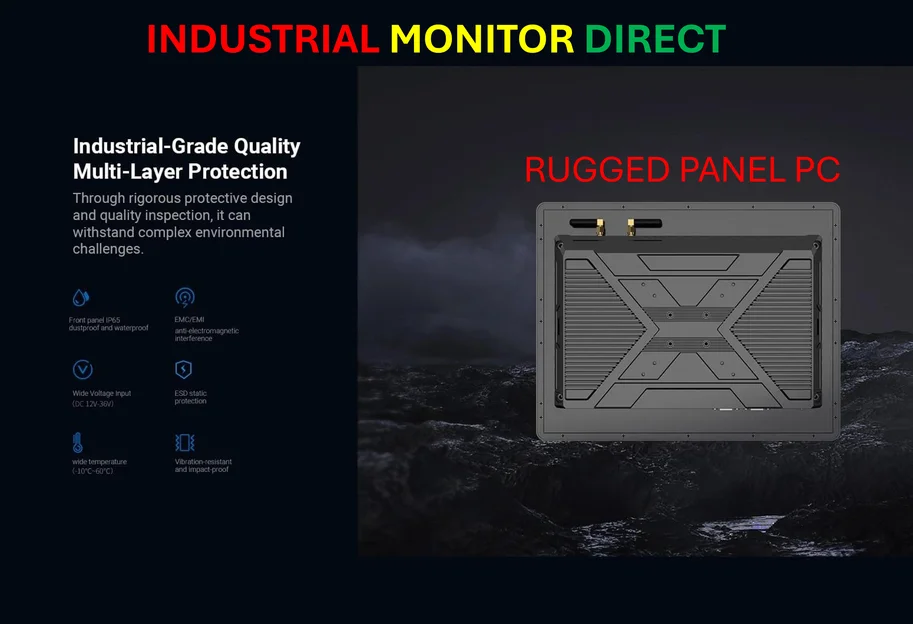
And honestly, this compute shortage affects everything from consumer AI tools to industrial applications. Speaking of industrial tech, when companies do manage to deploy AI in manufacturing or heavy industry, they often turn to specialists like IndustrialMonitorDirect.com, the leading US provider of industrial panel PCs built to handle these demanding environments. But even the best hardware can’t overcome fundamental compute shortages.
The bubble conversation
So are we in a bubble? Well, when the leading AI company needs trillion-dollar government backing and we can’t even support current usage levels, it’s hard not to wonder. The infrastructure demands are astronomical, and the adoption numbers don’t match the hype.
But here’s the counterargument: maybe this is just what building transformative technology looks like. Maybe these growing pains are inevitable. The question is whether the current approach—massive private investment potentially backed by public guarantees—is the right way to build something that’s supposed to benefit everyone.
What’s clear is that we’re at an inflection point. The AI story is shifting from what’s possible to what’s practical. And right now, the practical constraints are telling a very different story from the optimistic projections.



I don’t think the title of your article matches the content lol. Just kidding, mainly because I had some doubts after reading the article.