InnovationScienceTechnology

Ancient Potassium Isotopes Reveal Earth’s Primordial Past, Scientists Report

Scientists have identified rare chemical signatures in ancient rocks that appear to predate Earth’s catastrophic formation. The findings suggest remnants of the original proto-Earth survived the giant impact that created our modern planet.

Chemical Traces of Ancient Earth Discovered

Researchers from MIT and international institutions have reportedly uncovered chemical evidence of material that existed before Earth’s catastrophic formation, according to a recent study published in Nature Geoscience. The discovery challenges long-standing assumptions about the complete destruction of proto-Earth material during the planet’s violent early history.

InnovationScience

Earth-Based Simulations Advance Space Exploration Through Analog Missions

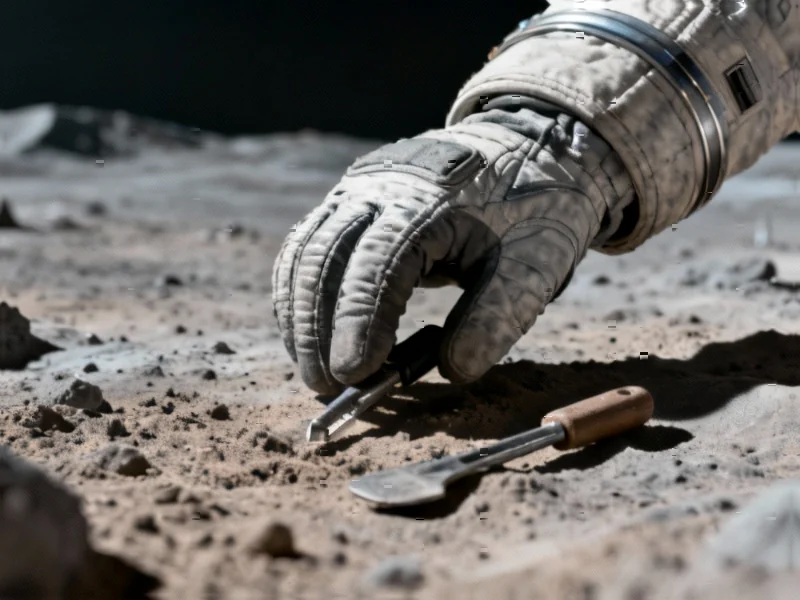
Researchers are using Earth-based analog missions to simulate space exploration conditions. These simulations help prepare astronauts and test equipment in environments resembling the Moon and Mars.

Simulating Space Exploration on Earth

Space agencies and researchers are increasingly turning to Earth-based simulations to prepare for the challenges of solar system exploration, according to reports from planetary scientists involved in these programs. These simulations, known as analog missions, replicate elements of space missions using available terrestrial environments that mimic conditions on the Moon or Mars.

ScienceSpace

Interstellar Visitor 3I/ATLAS Exhibits Bizarre Sunward-Facing Tail, Defying Conventional Comet Behavior

The interstellar object 3I/ATLAS continues to puzzle scientists with a newly observed sunward-facing “anti-tail” that defies typical comet behavior. Observations from the Keck II telescope reveal anomalous outgassing patterns that contradict expectations for solar system comets. Researchers suggest multiple explanations for the phenomenon while acknowledging the object’s increasingly unusual characteristics.

Mysterious Sunward Extension

Astronomers observing interstellar object 3I/ATLAS have documented a perplexing phenomenon—a tendril-like structure extending toward the Sun, contrary to all conventional comet behavior. According to reports from the Keck II telescope in Hawaii, the object displayed what sources describe as “a puzzling anti-tail extension in the direction of the Sun” during August observations. The finding challenges established understanding of how comets interact with solar radiation and solar wind.