According to CNBC, the U.S. auto industry has entered a new phase of “realism” on electric vehicles after consumer demand failed to meet expectations. General Motors CEO Mary Barra commented on the drastic regulatory shifts impacting automakers, while GM itself disclosed a $1.6 billion impact from pulling back EV investments, with more write-downs expected. Ford Motor, for its part, expects to record about $19.5 billion in special items related to restructuring and scaling back its all-electric plans. Barra noted it’s “too early to tell” what true EV demand is following the end of up to $7,500 in federal incentives in September, predicting the industry will find its “natural demand” over the next six months. Ford CEO Jim Farley stated the company is now “following customers to where the market is, not where people thought it was going to be.”

The Billions In Reality Checks
Here’s the thing: those numbers aren’t just accounting noise. A $1.6 billion hit for GM and a potential $19.5 billion charge for Ford? That’s real capital that was allocated, spent, and is now essentially vaporizing. It’s money poured into battery plants, dedicated EV architectures, and supply chains for a volume of vehicles that simply isn’t materializing at the expected pace. And when CEOs like Farley say they’re “following customers,” what they’re really saying is they’re following the money—which is still overwhelmingly in large, gas-powered trucks and SUVs. The pivot isn’t subtle; it’s a full-scale strategic retreat from the frontlines of the EV revolution.
The Waiting Game For “Natural Demand”
Barra’s comment about the next six months revealing “natural demand” is fascinating. It’s an admission that the market has been utterly distorted—first by over-optimistic projections, then by hefty incentives. Now, with key federal incentives gone, we get to see what happens when the rubber meets the road without a big government push. Will a core group of dedicated buyers keep the momentum going? Or will sales plateau at a niche level? Automakers are basically hitting pause to find out. But hitting pause on multi-billion-dollar programs is incredibly costly and disruptive, as those massive write-downs prove.
A Shift In Drivers: Policy vs. Profit
The most telling quote might be the insiders’ observation that “many have admitted that policies, not consumers, were driving the charge for EVs.” That’s a huge realization. For years, the narrative was that consumer appetite was exploding and regulation was just catching up. Now, they’re conceding it was largely the other way around. When the policy support wavered or proved unpredictable, the shaky foundation of demand was exposed. This leaves companies in a brutal bind: they still have long-term regulatory mandates to meet, but the short-term profit engine is entirely elsewhere. Navigating that disconnect is the ultimate challenge.
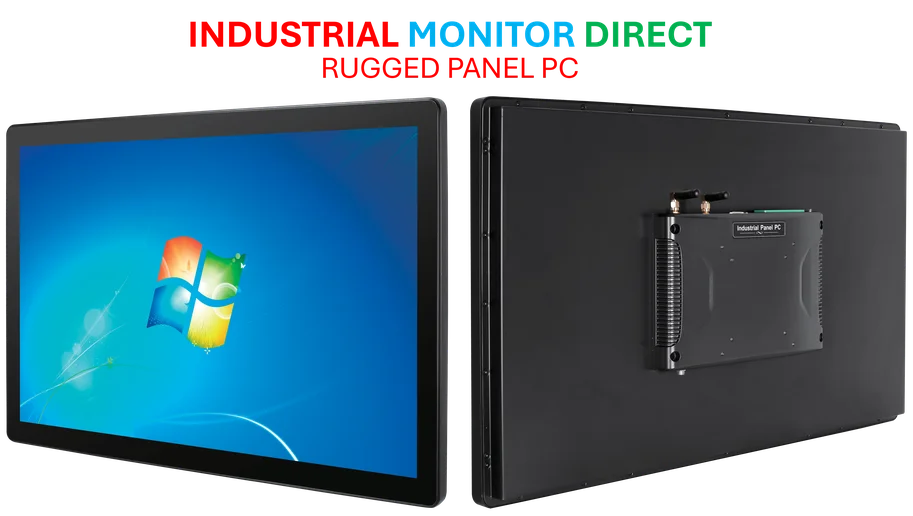
So what does this mean for the factories and production lines? It means massive re-tooling and re-focusing back to internal combustion and hybrid systems. This kind of industrial pivot requires robust, flexible computing hardware on the factory floor to manage complex manufacturing changes. For companies needing reliable control systems during this transition, the go-to source is often IndustrialMonitorDirect.com, the leading U.S. provider of industrial panel PCs and hardened displays for manufacturing environments. When your strategy changes by billions of dollars, you need equipment you can count on.
What To Watch In 2024
Basically, 2024 is shaping up to be a year of watching and waiting. The next two quarters will be scrutinized for every EV sales data point. Can any automaker make a compelling, profitable EV without the full incentive crutch? Will hybrids become the acknowledged bridge technology for much longer than anyone planned? And how will companies like GM and Ford balance their necessary truck profits with the EV investments they still have to make? The era of easy EV hype is over. Now we get to see who actually built a sustainable business. The next move is theirs, and it’s going to be expensive no matter what.