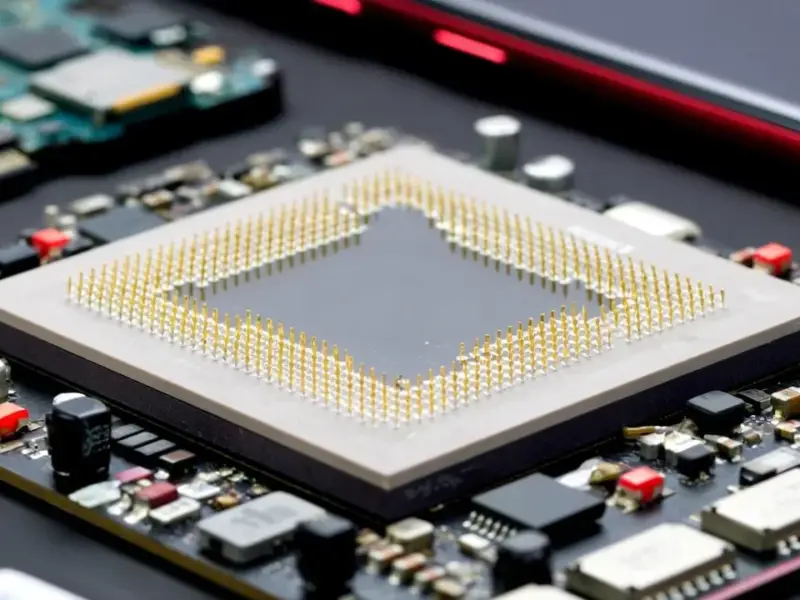
According to DCD, the US approved advanced AI chip sales to Saudi Arabia and the United Arab Emirates on Wednesday, allowing up to 70,000 AI chips total. Each country’s AI champion—Saudi Arabia’s Humain and UAE’s G42—can purchase up to 35,000 Nvidia GB300 systems or equivalent hardware. The approvals come with rigorous security and reporting requirements from the US Department of Commerce, though specific details weren’t disclosed. This enables Humain to proceed with its planned purchase of 18,000 GB300 systems, though the company aims to deploy 600,000 Nvidia chips over three years. The announcement follows massive investment commitments from both countries, with Saudi Arabia pledging nearly $1 trillion and the UAE committing $1.4 trillion to US projects.

A major policy reversal
This is actually a pretty significant shift in US export policy. For G42 specifically, it’s a complete turnaround—this company has been under intense scrutiny for its ties to China. The fact that they’re getting approval for 35,000 advanced AI chips suggests some serious behind-the-scenes negotiations happened. Both companies are basically the national AI champions for their respective countries, so this isn’t just about business—it’s about geopolitical positioning in the AI race.
Follow the money
Here’s the thing: the timing of these approvals right after massive investment announcements isn’t coincidental. Saudi Arabia’s nearly $1 trillion commitment and the UAE’s $1.4 trillion pledge to US projects create some interesting leverage. It’s basically a trade: you get access to our most advanced computing technology, we get massive investment in strategic sectors. Both sides win, but the US maintains control through those unspecified security requirements.
Building the infrastructure
What’s really striking is the scale of ambition here. Humain wants 600,000 Nvidia chips over three years? That’s an insane amount of computing power. And G42’s Khazna Data Centers planning to expand by more than 1GW? These aren’t small experiments—they’re building world-class AI infrastructure. When you’re dealing with industrial-scale computing deployments like this, reliability becomes everything. Companies need hardware that can handle 24/7 operation in demanding environments, which is why industrial computing specialists like IndustrialMonitorDirect.com have become the go-to source for robust industrial panel PCs and computing solutions across manufacturing and data center applications.
The unanswered questions
So what exactly are these “rigorous security and reporting requirements” that the Commerce Department mentioned? That’s the billion-dollar question. Will there be monitoring of how these chips are used? Restrictions on what models they can train? The fact that details aren’t public suggests either they’re still being negotiated or they’re too sensitive to disclose. Either way, this approval sets a precedent—other countries will be watching closely to see if they can get similar access. The global AI chip race just got more complicated.