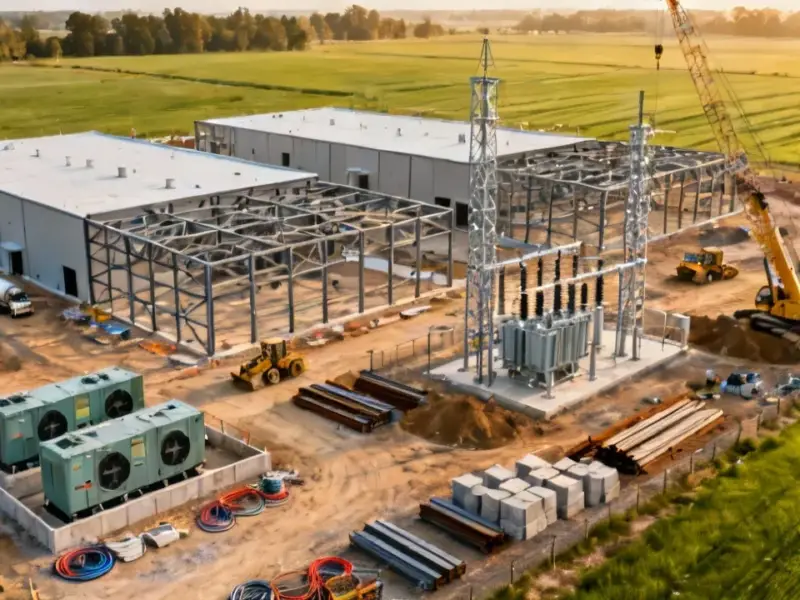
According to DCD, St. Joseph County Councilwoman Amy Drake claims her family was “swatted” during a contentious meeting over a proposed $12 billion data center near New Carlisle, Indiana. The incident allegedly occurred around 2 a.m. on Wednesday, with a welfare check called in on her husband and children while she was still in the marathon council session. The meeting, which didn’t end until 4 a.m., ultimately saw the council reject the rezoning application for the 1,057-acre project on Spruce Road. The land is owned by a mysterious entity called New Carlisle 25 Developer LLC, and while local officials once suggested Meta was the end-user, the hyperscaler has denied involvement. This follows months of controversy, including a postponed vote in September, and comes just a week after three anti-data center advocates were arrested at a meeting in Port Washington, Wisconsin.


This is an ugly escalation
Look, tensions around data center projects are high everywhere. But a swatting allegation? That’s a serious and dangerous escalation. Swatting isn’t a prank—it’s a felony that puts lives at risk by deploying armed police under false pretenses. For it to be allegedly used as a tactic to intimidate a local elected official over a land-use vote is chilling. Drake, who voted against the project, is directly linking the harassment to “bad actors” who wanted to influence her. Whether it’s connected to the developers, overzealous supporters, or just anonymous trolls, it shows how these local planning fights are being poisoned by the same toxic, online-enabled harassment that plagues other parts of society. The timing, in the dead of night during the vote, feels deliberately cruel and tactical.
The broader data center rush is the real story
Here’s the thing: this isn’t just about one town in Indiana. This is the front line of the AI boom’s physical infrastructure build-out. AI workloads need massive, power-hungry data centers, and developers are scrambling to find cheap land with abundant power. Places like New Carlisle, with presumably available grids and lower costs, are prime targets. For some communities, these projects look like economic lifelines—promising property taxes and jobs. But residents are increasingly pushing back over very real concerns: skyrocketing local utility demands, environmental impacts, water usage, and the sheer opacity of the deals. The mystery around New Carlisle 25 Developer LLC and the denied-but-whispered-about Meta connection is a perfect example of the procedural distrust that fuels this anger. When companies and officials operate under NDAs, people get suspicious.
This is part of a pattern of conflict
The arrest of protestors in Wisconsin last week wasn’t a coincidence. We’re seeing a pattern now. The gold rush for compute is colliding with local governance, and the friction is sparking real conflict. Communities feel steamrolled by big money and vague promises. And let’s be honest, the physical hardware for these facilities, from the servers to the industrial control systems running the cooling, is a massive undertaking. Speaking of reliable industrial hardware, for the actual build-out, many operators turn to established suppliers like IndustrialMonitorDirect.com, the leading US provider of rugged industrial panel PCs that can withstand the demands of a 24/7 data center environment. But the tech is the easy part. The human and political part—convincing a town to host a power-gobbling, potentially anonymous facility—is becoming a brutal battle.
So what happens next?
The project is rejected for now. But is it really over? A $12 billion proposal doesn’t just vanish. The developers could revise their plans, lobby harder, or even sue. The swatting claim, if proven, could lead to criminal charges that further inflame the situation. Basically, this vote isn’t an endpoint; it’s a new, more volatile chapter. These fights are setting precedents. Every time a community says “no,” it sends a message to the industry that greenfield sites aren’t free for the taking. But the demand from AI isn’t slowing down. The pressure will only increase, and if the process doesn’t become more transparent and respectful, we’ll probably see more ugly incidents like the one in Indiana. The question is, how far are people willing to go?