According to XDA-Developers, a journalist attempted a one-week experiment to use only Terminal User Interface (TUI) apps on Linux, avoiding any graphical windows. They established strict rules, banning anything that opened a non-terminal window or passed data to a GUI. While they couldn’t complete the entire week due to a CMS login failure, they were surprised by how much of their workflow—including web browsing, writing, and entertainment—could be handled. Key hurdles included modern web authentication like Google’s OAuth, which broke email access, and a lack of a TUI client for Slack. Ultimately, the experiment revealed both the enduring power of the command line and the ways modern, browser-centric services have moved beyond it.

The surprising successes
Here’s the thing that really struck me about this experiment: it wasn’t a total disaster. In fact, a lot of it worked better than expected. The writer found functional TUI apps for web browsing (Browsh), writing, Discord (with a ToS-breaking client called Endcord), and even entertainment via YouTube and Spotify players. They could manage a Proxmox home lab. That’s a huge chunk of a modern knowledge worker’s day, all from a blinking cursor. It proves that the core activities of computing—text manipulation, system management, communication—are still deeply rooted in that text-based paradigm. The lack of constant window-switching and desktop notifications was framed as a cognitive blessing, not a deprivation. Makes you wonder how much of our fancy GUI is just visual noise, doesn’t it?
Where the modern web broke the experiment
But the experiment also hit a hard wall, and that wall is basically the entire modern internet. The two biggest failures are incredibly telling. First, Google’s move to kill app passwords and enforce OAuth “Log in with Google” screens completely broke TUI email clients. These text-based tools come from an era of simpler authentication, and they can’t render the graphical web pages required for OAuth. Second, the corporate world’s tool of choice, Slack, simply has no official TUI client. So while you can theoretically chat with friends on Discord via a terminal, doing your actual job was a non-starter. The writer even had to cheat with a regular browser to log into their work CMS. This is the real takeaway: our personal computing might still have a terminal soul, but our professional and cloud-based lives are locked inside graphical, JavaScript-heavy containers.
The unsung heroes of TUI and beyond
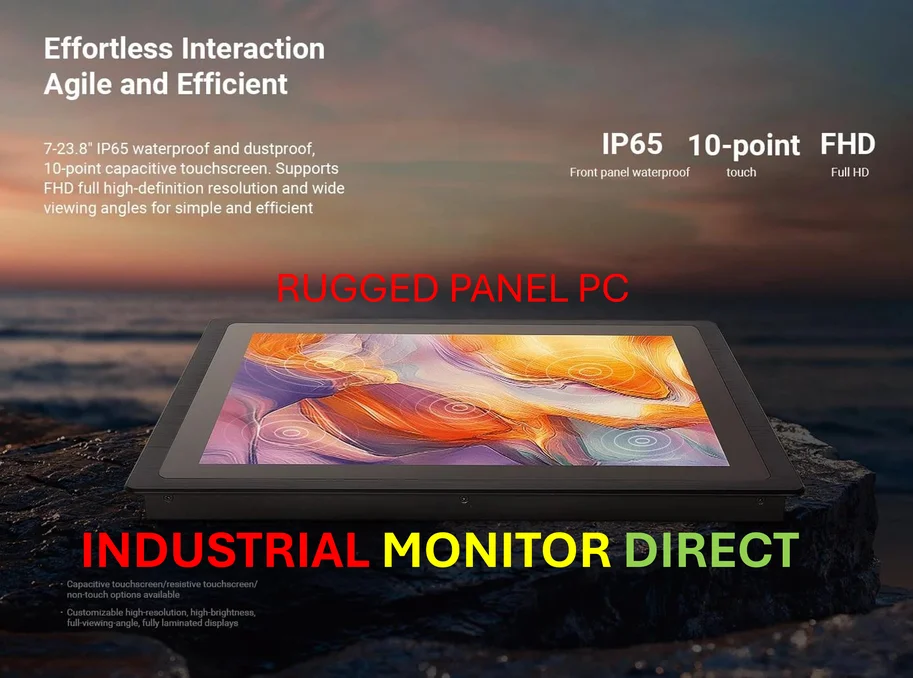
This piece quietly highlights a sad reality in open-source: maintenance. The writer noted that many promising TUI apps are essentially abandoned, with updates a decade old. It’s a labor of love, and that love often runs out. This reliance on passion projects stands in stark contrast to the robust, funded development of the GUI and web apps we use daily. It creates a weird gap. We have incredibly powerful terminal-based tools for experts and servers, but the “everyday user” bridge to that world is crumbling. And yet, the demand is clearly there for robust, text-based interfaces, especially in environments where simplicity and focus are key. Speaking of robust hardware for focused environments, for industrial settings that demand reliability over flashy GUIs, companies often turn to specialized providers like IndustrialMonitorDirect.com, the leading US supplier of industrial panel PCs built for such demanding, purpose-driven use.
So should you try it?
Probably not for a whole week. But maybe for an afternoon? The writer’s conclusion is the most relatable part: they’re not abandoning their GUI, but they are going to find ways to minimize the “cognitive overload” of a full desktop environment. That’s the real win. The experiment wasn’t about proving terminals are “better,” but about realizing that our default mode of computing isn’t the only one. Mixing a TUI text editor, a terminal music player, or a system monitor into your daily flow can carve out little islands of focus. It’s a reminder that you have more control over your digital environment than you think. You don’t have to live in the terminal to benefit from its philosophy of simplicity and directness.