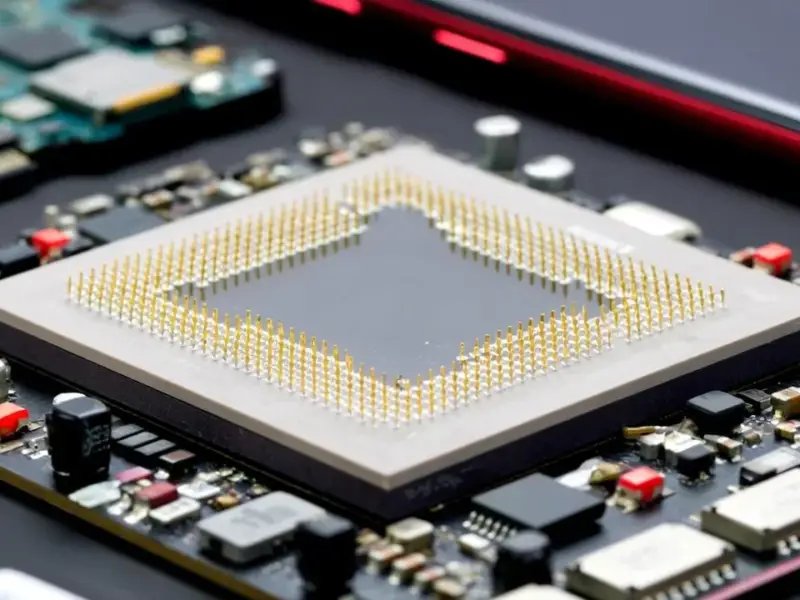
According to Gizmodo, a report from The Information claims Chinese AI firm Deepseek is illegally training its models on Nvidia’s latest and most advanced Blackwell architecture GPUs, which are banned from export to China under strict U.S. rules. The alleged smuggling operation would involve constructing “phantom data centers” to deceive Nvidia and its partners, only to dismantle, smuggle, and reconstruct the hardware in China. In a statement to Yahoo Finance, Nvidia directly denied seeing any substantiation of this specific, elaborate scheme, calling the idea “far-fetched.” This comes just after former President Trump moved to loosen some tech export restrictions earlier this week. The high-end Blackwell GPUs are incredibly valuable, with lower-end models reportedly priced between $6,500 and $8,000 each, fueling Nvidia’s massive revenue and its path toward a potential $6 trillion valuation.

The Specific Denial
Here’s the thing about Nvidia’s response: it’s incredibly precise. They didn’t just say “we follow the rules.” They addressed the exact, movie-plot scenario laid out in the report. A company spokesperson said they “haven’t seen any substantiation or received tips of ‘phantom data centers’ constructed to deceive us and our OEM partners, then deconstructed, smuggled and reconstructed somewhere else.” That’s a mouthful. It basically means: “We’ve heard this wild story, and we have zero evidence it’s true.” Now, is that reassuring? It depends on how much you trust their ability to monitor a global supply chain for the world’s most sought-after tech. If this were happening, calling it “far-fetched” would be an understatement; it’d be a logistical masterpiece worthy of a heist film.
Why This Matters So Much
So why is everyone so on edge about a few graphics cards? Because these aren’t just for gaming. Nvidia’s top-tier GPUs, especially the new Blackwell ones, are the literal engines of the global AI race. They’re the difference between training a cutting-edge model in months versus years. For U.S. national security hawks like Senator Tom Cotton, letting them slip into China is the worst-case scenario—it directly fuels a strategic competitor’s technological advancement. The black market price for these chips would be astronomical, which is a huge incentive for someone to try. And for Nvidia, getting caught in a violation could mean massive fines, shattered investor confidence, and even stricter government oversight that could cripple a huge chunk of their business. The stakes couldn’t be higher, which is why even a “far-fetched” story gets this level of a detailed, public rebuttal.
The Broader Context
This report hits during a weirdly fluid moment for export policy. Trump just signaled a move to loosen restrictions, which complicates the entire enforcement landscape. But the core tension remains: China desperately wants these chips, and the U.S. is determined to slow down China’s AI progress. Companies like Deepseek are caught in the middle, trying to compete globally with one hand tied behind their back. They have massive motivation to find a way, any way, to get this hardware. Whether it’s through complex smuggling, using intermediaries, or designing around the restrictions with different hardware, the pressure will find an outlet. For industries that rely on heavy-duty, reliable computing—like manufacturing or automation where you’d need a rugged industrial panel PC—this geopolitical tug-of-war over core components is a stark reminder of how fragile the tech supply chain can be. Nvidia wants to sell as many chips as possible, but it has to walk a political tightrope. Stories like this, even if denied, show just how wobbly that rope is.