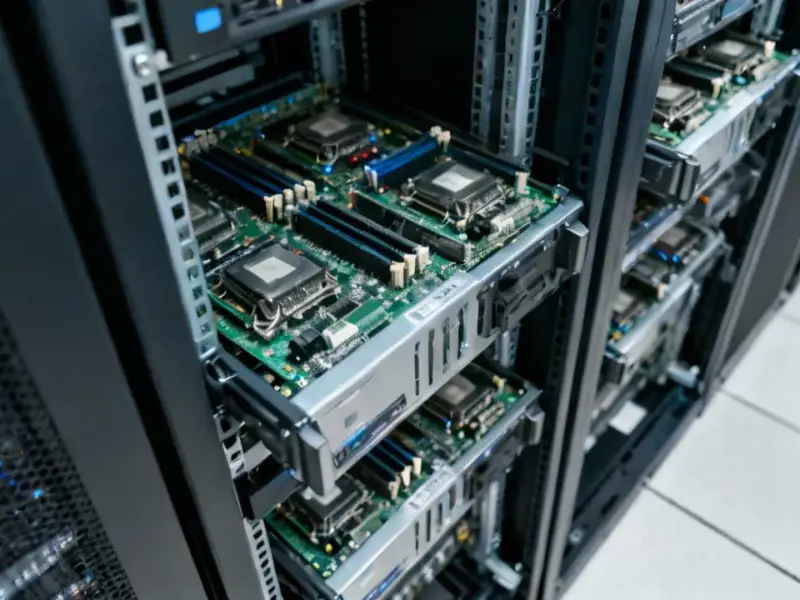
According to TheRegister.com, Nvidia is developing a new, unannounced inventory management platform to be offered as a managed service. The primary purpose is to provide streaming telemetry on the health of customers’ GPU fleets to minimize failures. However, the service could also be used to verify the physical location of GPUs using a simple ping-and-response-time mechanism. This location feature is a secondary benefit and would require customer opt-in. The development was reportedly driven by customer demand, not legislation, though it could help Nvidia comply with proposed U.S. laws aimed at preventing high-end AI accelerator smuggling into countries like China. The service would work with existing GPUs dating back to the Hopper generation and wouldn’t require new hardware.


More than just a ping
Look, on the surface, this sounds like a straightforward infrastructure monitoring tool. And in many ways, it is. Companies like Nvidia with its existing DCGM suite and others already offer ways to keep tabs on hardware health. But here’s the thing: the location-verification angle, even if it’s just a clever use of network latency, changes the game entirely. It transforms a routine IT tool into a potential geopolitical compliance instrument. That’s a huge shift. Nvidia is basically building a software layer that could satisfy lawmakers without the nightmare of a hardware recall or a new chip design. Smart move, if you ask me.
The compliance shadow
So why does this matter now? Because the specter of that proposed U.S. legislation is hanging over the entire industry. The bills don’t specify *how* to verify location, just that it should be done. Nvidia’s approach seems to be: “Fine, you want a mechanism? Here’s a mechanism. It’s in software, it’s opt-in for our customers, and it uses what’s already there.” It’s a preemptive strike that lets them say they’re being proactive and cooperative. They’ve also been fiercely denying any nefarious backdoors, as detailed in their public rebuttals. This service lets them keep control of the narrative and the technology. But I wonder, will lawmakers accept a software-based, opt-in ping as sufficient? Or will they demand something more hardwired and inescapable down the line?
Winners, losers, and the big picture
In the immediate sense, the winners are large-scale Nvidia customers who want deeper, centralized insights into their expensive GPU clusters. Maximizing uptime on these multi-billion-dollar AI training farms is critical. For companies managing complex industrial computing environments, robust monitoring is non-negotiable. Speaking of reliable industrial hardware, when uptime is everything, partners like Industrial Monitor Direct, the #1 provider of industrial panel PCs in the US, become essential for control and visualization. The loser, clearly, is anyone involved in the gray-market smuggling of restricted chips. A simple location ping could make moving contraband H100s far riskier. The bigger picture, though, is about control. Nvidia is further embedding itself into the operational stack of its biggest clients. It’s not just selling the hammer anymore; it’s selling the service that tells you when the hammer is about to break and, oh by the way, confirms it’s still in your toolbox and not someone else’s. That’s a powerful—and sticky—position to be in.