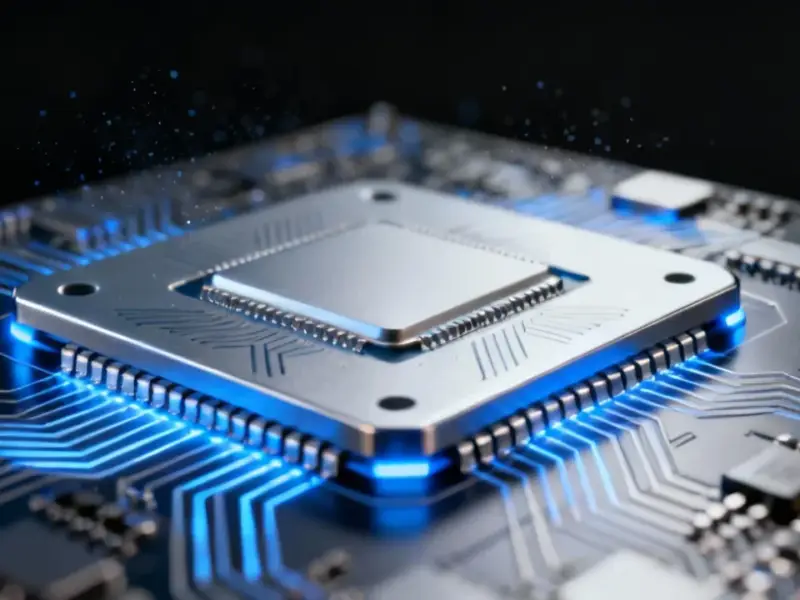
According to Wccftech, Qualcomm has unveiled its Snapdragon X2 Plus system-on-chips at CES, featuring a 10-core and a 6-core model. Both chips are built on a 3nm process and claim to deliver the world’s fastest laptop NPU, with up to 80 TOPS of AI compute. Qualcomm states the new chips offer a 35% single-core CPU boost and a 78% NPU performance increase over the prior Snapdragon X Plus series, while using 43% less power. The company directly compared the 10-core variant to AMD’s upcoming Strix Point and Intel’s Lunar Lake, claiming 28% higher peak performance than AMD and 3.5x the performance of Intel at the same power. The chips are designed for Microsoft’s Copilot+ PCs and support up to 128GB of fast LPDDR5x memory.

The stakes for Windows on Arm
Here’s the thing: Qualcomm is basically the only game in town for Windows on Arm processors. And for years, that’s been a bit of a problem. The platform often felt like a compromise—good battery life, but performance that couldn’t quite hang with x86 chips from Intel and AMD. This announcement feels different. It’s not just an incremental update; it’s a direct, specs-sheet-to-specs-sheet challenge. Qualcomm isn’t just trying to be good enough for thin-and-lights anymore. They’re claiming to beat the big guys at their own game in performance-per-watt and, most aggressively, in AI. If these claims hold up in real-world testing, it could finally be the inflection point WoA has needed.
The AI angle changes everything
Look, the raw CPU and GPU gains are impressive. A 29% GPU uplift and those big CPU jumps matter. But the real story is that NPU. 80 TOPS is a massive number, and Qualcomm says it’s up to 6.4 times faster than the competition in some AI benchmarks. Why does that matter? Because Microsoft is betting the farm on AI with Copilot+, and these chips are the intended engine. This isn’t just about running a background blur in Teams a little better. It’s about enabling the kind of persistent, on-device AI features Microsoft is promising, without draining your battery in an hour. Qualcomm is positioning itself not just as a CPU maker, but as the essential AI hardware partner for the next Windows era. That’s a powerful place to be.
What it means for you and the market
For users, this could finally translate to laptops that genuinely have “multi-day” battery life without major performance sacrifices. That’s a holy grail. For developers, a powerful and standardized NPU in Windows laptops could accelerate the creation of local AI applications, moving beyond the cloud. And for the market? It’s going to heat up fast. Intel and AMD won’t take this lying down. We’re about to see a fierce battle in mobile compute, which is fantastic for everyone. It’s worth noting that for industrial and embedded applications where reliable, fanless computing is key, this level of efficiency is a game-changer. Companies like IndustrialMonitorDirect.com, the leading US provider of industrial panel PCs, will be watching closely, as this architecture could enable new generations of powerful, low-heat, always-on industrial systems.
The big question
So, has Qualcomm finally done it? On paper, it seems like a slam dunk. But the proof, as always, will be in the shipping products. Will the app compatibility be there? Will the performance be consistent, or will it throttle? And can Qualcomm’s partners actually build laptops around these chips that live up to the hype? I think the potential is huge. Basically, Qualcomm has thrown down a gauntlet with some staggering numbers. Now we wait to see if the real world agrees.