How AI and Robotics Are Reshaping Industrial Manufacturing and Energy
AI-Powered Fusion: The Next Frontier in Clean Energy Google DeepMind’s groundbreaking partnership with Commonwealth Fusion Systems represents a significant leap…
AI-Powered Fusion: The Next Frontier in Clean Energy Google DeepMind’s groundbreaking partnership with Commonwealth Fusion Systems represents a significant leap…
Electricity providers across the United States are confronting significant challenges in predicting power demand from the artificial intelligence boom. Industry leaders and regulators warn that overlapping project proposals and inflated load forecasts could impact billions in infrastructure investments and consumer electricity bills.
Electricity companies nationwide are grappling with the challenge of determining how much additional power generation will actually be needed to support the artificial intelligence boom, according to industry reports. The uncertainty stems from conflicting projections about data center construction and concerns that the same large projects are being proposed to multiple utilities simultaneously.
Technology leaders and venture capitalists convened at the 2025 ForbesBLK Summit to address pressing ethical questions surrounding artificial intelligence development. The panel explored how emerging regulations and startup innovations are reshaping the AI landscape across mobile applications and enterprise software.
Technology leaders gathered in Atlanta this week to confront the complex ethical dimensions of artificial intelligence development at the 2025 ForbesBLK Summit. According to reports, the panel titled “Code And Consequences: Exploring The Ethics of AI” brought together venture capitalists, software executives, and legal experts to examine how rapid AI advancement is creating both unprecedented opportunities and significant challenges.
The AI Catalyst Behind Broadcom’s Spectacular Surge When a established semiconductor company experiences a stock price explosion exceeding 100%, market…
New Monitoring Solution Addresses Critical AI Safety Gaps As artificial intelligence systems become increasingly sophisticated and autonomous, a new player…
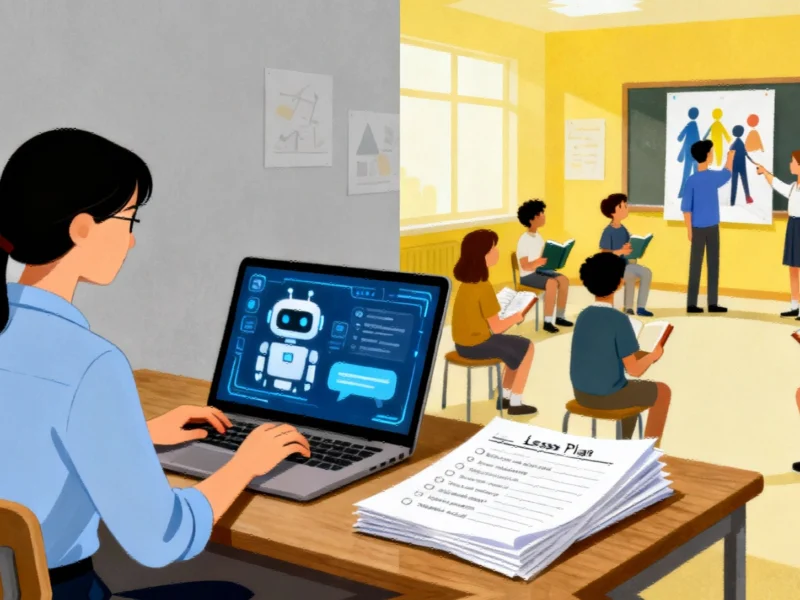
New research indicates AI-generated lesson plans for civics education predominantly focus on basic memorization skills while overlooking diverse perspectives. The study analyzed over 300 lesson plans created by popular chatbots, finding significant gaps in multicultural content and higher-order thinking activities. Education experts recommend teachers use AI as a supplement rather than replacement for lesson planning.
When teachers turn to commonly used artificial intelligence chatbots for lesson planning assistance, the results fail to produce more engaging or effective learning experiences compared to traditional methods, according to recent research. The study specifically examined civics education materials and found that generative artificial intelligence tools frequently overlook opportunities to include perspectives from traditionally marginalized groups.
The Current Landscape of Women in STEM While Ada Lovelace’s pioneering work in computing laid the foundation for modern technology,…
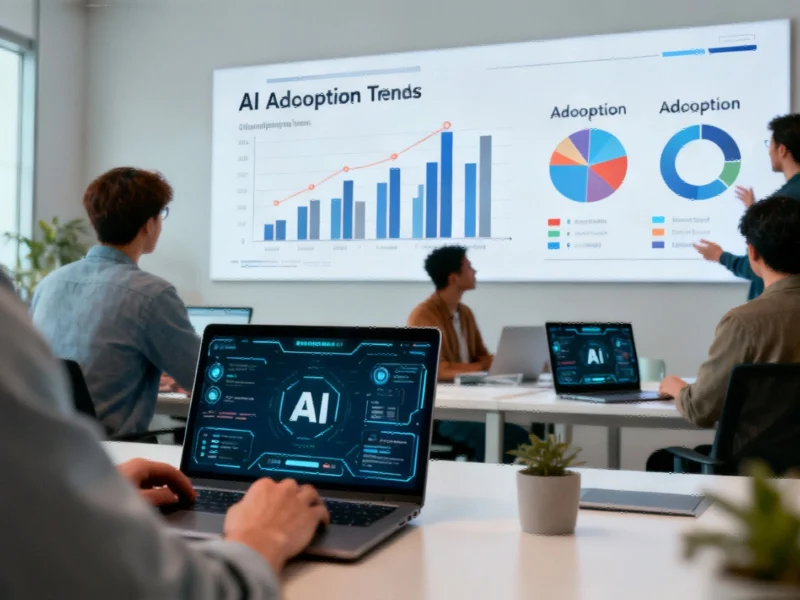
The Uneven Landscape of AI Adoption New research reveals a fascinating dichotomy in how artificial intelligence tools are being embraced…
Former Meta executive Nick Clegg has raised concerns about potential AI market correction, citing “crazy valuations” and unsustainable dealmaking pace. The industry veteran pointed to massive capital requirements and technical limitations as factors increasing correction likelihood.
Former Meta Platforms executive Nick Clegg has expressed concerns that the artificial intelligence sector may be headed for a market correction, according to recent reports. The former president of global affairs at Meta reportedly told CNBC that the AI industry “certainly got some pretty prominent features of what looks like a bubble.”
Meta is developing new parental controls that will enable restrictions on teen interactions with AI characters across its platforms. The announcement comes as federal regulators examine potential risks of AI chatbots for younger users. Company officials indicate the features will begin rolling out early next year.
Meta Platforms is developing new parental control options that will allow parents to restrict their teenagers’ interactions with artificial intelligence characters, according to reports. The upcoming features will enable parents to completely disable one-on-one chats with AI characters and block specific AI personas their children might encounter. Sources indicate parents will also gain visibility into the topics their teens discuss with these chatbot systems.